
Device Lifting
Facial laxity isn't one problem. For some it's the support of the fascial layer giving way, so everything drifts downward; for others the dermal collagen has thinned and the skin has lost its spring; for many it's both. So the first step in lifting isn't choosing a machine — it's working out which layer has loosened.
Treatments in this category
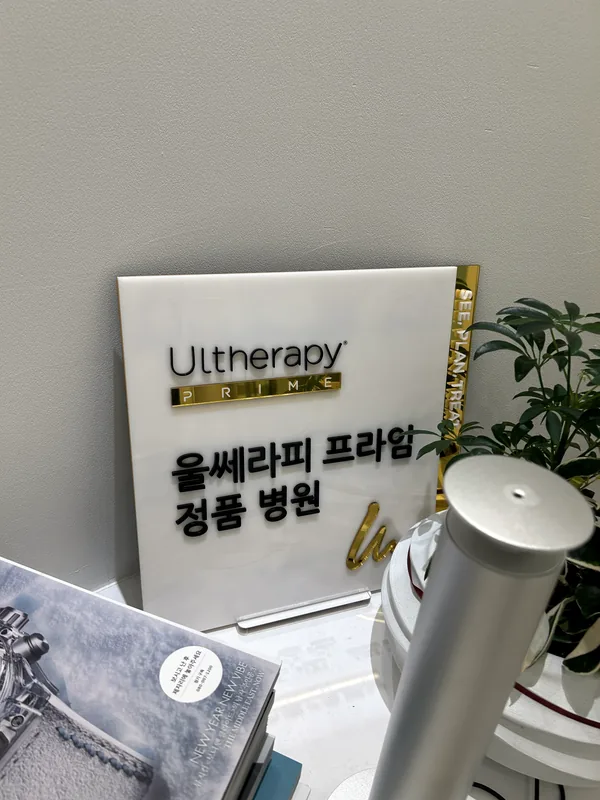
Ultherapy Prime
Ultherapy was among the first micro-focused ultrasound lifting devices to see wide use; Prime is the upgraded model. The…
Read more
Thermage FLX
Thermage FLX is a monopolar radiofrequency device. The clinic positions it as the surface axis of its lifting programme,…
Read more
Shurink Universe
Shurink Universe is a Korean-made focused ultrasound (HIFU) device. The clinic's website positions it as 「진피~SMAS층 타겟 리프…
Read more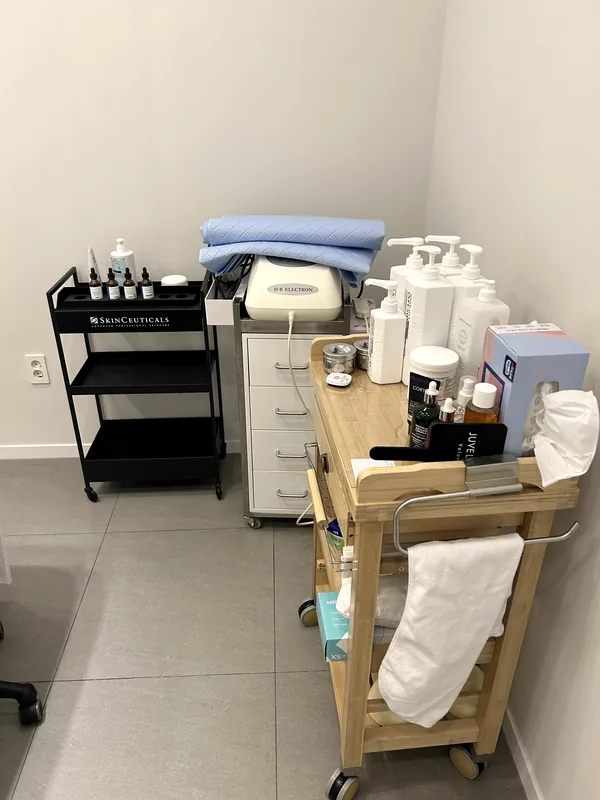
Volnewmer (볼뉴머)
볼뉴머 is a Korean-made monopolar radiofrequency device. The clinic's website describes it as 「강력한 고주파로 표면•진피 동시 자극」 — stro…
Read more
Virtue RF (microneedle radiofrequency)
"Gold microneedle" is the marketing name; the full description is microneedle radiofrequency — ultra-fine needles pass t…
Read moreThe clinic's approach: two axes, deep and surface
THE LIZ describes its lifting programme as 「울쎄라피 프라임과 써마지 FLX, 두 축」 — Ultherapy Prime and Thermage FLX as two axes.
The logic is a clean division of labour. Ultherapy Prime works deep: micro-focused ultrasound reaches the SMAS fascial layer and is responsible for pulling sagging support back up. Thermage FLX works from surface to dermis: monopolar radiofrequency remodels collagen from epidermis through dermis, handling the skin's own tightness and texture.
The clinic's phrasing for the combination is 「울쎄라와 병합시 심부+표면 동시 개선」 — used with Ultherapy, deep and surface improve together. That is why the two usually sit in the same plan rather than being an either/or.
The other three each have a place: Shurink Universe swaps transducers by area and covers dermis to SMAS; Volnewmer stimulates surface and dermis together with strong radiofrequency; Virtue RF delivers radiofrequency directly into the dermis through microneedles, spanning lifting and texture.
Understanding "layers"
From surface to depth the face runs roughly: epidermis and dermis, subcutaneous fat, the SMAS fascial layer, bone. Non-surgical lifting devices differ mainly in which layer their energy reaches.
Micro-focused / focused ultrasound (Ultherapy Prime, Shurink Universe) concentrates energy at a set depth to create small coagulation points. Common depths are 4.5 mm (roughly the SMAS), 3.0 mm (deep dermis) and 1.5 mm (superficial dermis). Because the energy is point-focused, it passes through the epidermis and acts directly on deeper tissue.
Monopolar radiofrequency (Thermage FLX, Volnewmer) drives current through tissue to generate heat, distributing energy relatively evenly through dermis and subcutis, with effects on overall tightness and skin quality.
Microneedle radiofrequency (Virtue RF) uses ultra-fine needles to pass through the epidermis and release radiofrequency at the needle tip at a set depth, sidestepping the epidermal heat load.
In short: ultrasound leans towards "lifting deep support upward", radiofrequency towards "tightening the upper and middle layers", and microneedle RF towards "precise delivery into the dermis". None replaces another.
How the five devices are positioned
| Device | Energy | Main working layer | Typically suited to |
|---|---|---|---|
| Ultherapy Prime | Micro-focused ultrasound (MFU-V) | Down to the SMAS | Descending contour, softened jawline, sagging under the chin |
| Thermage FLX | Monopolar radiofrequency | Epidermis to dermis | Skin that has lost its spring, lax texture, fine lines |
| Shurink Universe | Focused ultrasound (HIFU) | Dermis to SMAS, interchangeable transducers | Routine improvement of general laxity, tailored by area |
| Volnewmer (볼뉴머) | Monopolar radiofrequency | Surface and dermis together | Restorative programmes for overall elasticity and texture |
| Virtue RF | Microneedle radiofrequency | Dermis, adjustable depth | Loss of firmness combined with pores or scarring |
The table is for understanding the differences, not for choosing. The plan depends on degree of laxity, subcutaneous fat, skin thickness and treatment history, and is decided at consultation. The clinic's website romanises 볼뉴머 as "Volumer"; the product's common trade name is Volnewmer, so both are shown for cross-reference.
When intensive lifting is considered
The clinic's website lists three typical situations: jawline and neckline sagging together, blurring the facial contour; deepening nasolabial folds and cheek hollowing, giving a harder expression; and wanting a result that lasts longer.
The opposite case deserves a warning: for someone with thin subcutaneous fat and a naturally lean face, deep-layer energy can further reduce local volume and leave the face looking more tired. Such cases usually lean towards radiofrequency, or need volume replacement alongside. Only a consultation can make that call — please don't self-diagnose from a list.
Results and timing
What lifting treatments share is that the result doesn't appear on the day. The heat from ultrasound and radiofrequency triggers collagen remodelling, which unfolds over weeks to months; most people notice it clearly at around two to three months.
Duration varies with age, baseline laxity and lifestyle (sun protection and weight fluctuation especially). Thinking of it as "slowing down" rather than "reversing" keeps expectations closer to reality.
Book a consultation
The clinic is By appointment only; walk-ins cannot be accommodated. Please confirm a time in advance.