
Device Lifting
Ultherapy or Thermage — how to choose
The question has no direct answer, because the two do fundamentally different things. In the clinic's own plan, Ultherapy Prime and Thermage FLX are two parallel axes, not an either/or — one for deep support, one for surface tightness. This page lays out the differences between all five devices.
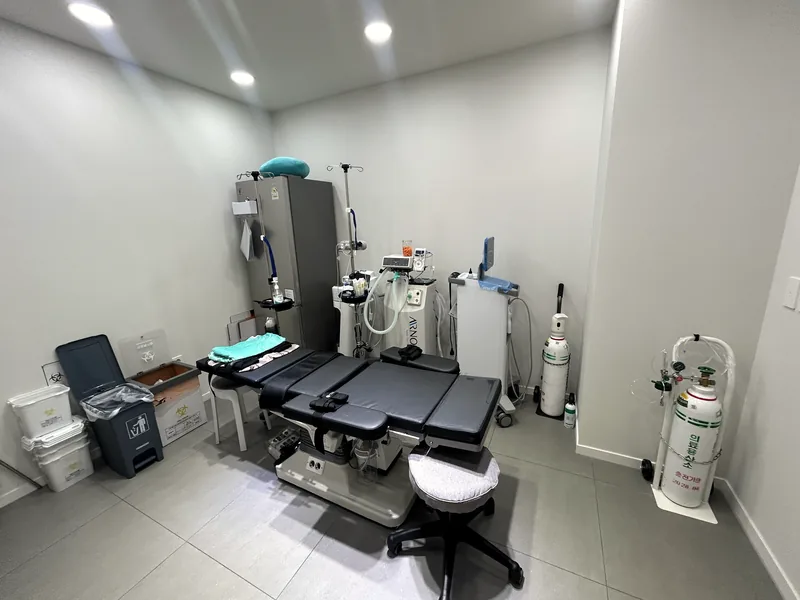
Start with how the clinic itself divides the work
The website describes its lifting programme as 「울쎄라피 프라임과 써마지 FLX, 두 축으로 완성하는 강력 리프팅」 — intensive lifting completed on two axes, Ultherapy Prime and Thermage FLX.
That phrasing already answers "which is better": they aren't in the same race.
Ultherapy Prime is micro-focused ultrasound — point-focused energy reaching the SMAS — addressing "the support structure has dropped". Thermage FLX is monopolar radiofrequency — energy spread evenly through epidermis to dermis — addressing "the skin itself has loosened".
The other three each have a role: Shurink Universe is also focused ultrasound but swaps transducers by area; Volnewmer is also monopolar RF, used more for cyclical maintenance; Virtue RF delivers RF into the dermis by microneedle, spanning lifting and texture.
The whole picture in one table
| Ultherapy Prime | Thermage FLX | Shurink Universe | Volnewmer | Virtue RF | |
|---|---|---|---|---|---|
| Energy | Micro-focused ultrasound | Monopolar RF | Focused ultrasound | Monopolar RF | Microneedle RF |
| Distribution | Point-focused | Relatively even | Point-focused | Relatively even | Point, at needle tip |
| Main layer | Down to the SMAS | Epidermis to dermis | Dermis to SMAS | Surface and dermis | Dermis, adjustable |
| Real-time imaging | Yes | — | — | — | — |
| Sensation | Marked aching heat | Warm to brief hot flashes | Heat and aching | Steady warmth | Pricking and heat |
| Recovery | Short; brief redness or swelling possible | Short | Short | Very short | Marked, 1–3 days |
| Texture benefit | Limited | Good | Limited | Good | Strong |
| Pricing basis | Per line | Per shot | Per line | Per session or line | Per session |
For understanding the differences, not for choosing. The plan is decided by the doctor at consultation.
Ask yourself three questions
First — which layer has loosened?
If the whole contour has descended — jawline blurred, cheeks dropped, mid-face volume heading south — the problem is mostly structural support, and focused ultrasound (Ultherapy Prime, Shurink Universe) is the more direct route.
If the skin itself has lost its spring — soft to the touch, lax texture, pores stretched by laxity, but the contour still in place — the problem sits in the epidermis to dermis, and radiofrequency (Thermage FLX, Volnewmer) is usually the better fit.
If both — the commonest picture after forty — that's the "two axes" scenario the clinic describes, which calls for a combination rather than a choice.
Second — how much subcutaneous fat do you have?
Often overlooked. Deep-layer focused ultrasound also affects the fat layer. For a naturally full face that may be a plus; for a lean face with thin fat, further volume loss can look tired and older. Radiofrequency is usually the safer choice there, or ultrasound paired with a collagen stimulator to replace volume.
Third — how much recovery can you accept?
Of the five, Virtue RF has the clearest recovery period (one to three days of redness, possibly flaking); the other four are all "short". If your trip is brief and packed, weight this heavily.
Some common scenarios
Early thirties, no real laxity yet, thinking about prevention
This stage rarely needs intensity. Gentle radiofrequency with regular maintenance beats a single high-intensity treatment. Prevention is about slowing down, not spending ahead.
Around forty, jawline starting to soften, face still reasonably full
A fairly typical focused-ultrasound case. Adequate subcutaneous fat means deep energy is less of a concern. Ultherapy Prime as the main treatment, with Thermage FLX for surface texture if warranted — the clinic's "two axes" in its typical form.
Over forty, lean face, prominent cheekbones, loose but thin skin
Caution here. Deep energy could reduce already-scarce subcutaneous volume. Plans usually lean towards radiofrequency, or ultrasound combined with a collagen stimulator for volume — but that needs the doctor's overall judgement, not self-selection.
Not much laxity; the real concern is pores and pitted scars
That's not really lifting territory. Virtue RF sits between the two categories and can cover both, but deeper pits may need fractional laser. Start from the Skin Care section.
Had a thread lift or filler before, now wants lifting
Tell the doctor at consultation — when, what material, where. Existing implants change how energy can be delivered; it's a safety matter, not optional detail. Non-dissolvable materials especially need to be disclosed.
Common misconceptions
"You have to pick either Ultherapy or Thermage"
Not so. Their working layers don't overlap, and the clinic's own plan sets them side by side as two axes. Whether to do both in one period and at what interval is the doctor's call based on skin tolerance, but mechanistically they complement each other.
"More lines means better results"
Not so. Energy delivery must match what the tissue can tolerate and recover from; over-treating doesn't scale the result, it scales discomfort and recovery. The right number is determined by area and individual condition.
"One treatment fixes it for good"
Not so. These treatments change collagen; ageing continues regardless. Results fade with time and need periodic maintenance. Thinking of it as slowing rather than reversing keeps expectations realistic.
"You'll see the lift immediately"
Usually not. Swelling on the day may look like tightening, but it isn't the real result. Collagen remodelling takes time; most people see it clearly at two to three months.
"The more expensive device must suit me better"
Price reflects equipment cost and market positioning, not fit. A lean face having an intensive deep-layer treatment won't get a better result for spending more. Fit matters more than price tier.
"Quotes vary so much — just go with the cheapest"
Quotes can't be compared directly, because line counts, areas covered and transducer configurations may differ entirely. Align those three first; otherwise you're comparing different things.
Questions worth asking at consultation
- Which layer is my laxity mainly in? Why this device rather than the other?
- Do I need the two-axis combination? If so, together or staged?
- How many lines, which areas, which transducer setting?
- Is my subcutaneous fat suited to this plan? Any concern about volume loss?
- How can I verify the equipment and transducers are genuine?
- How long is recovery, and does my schedule work?
- If the result falls short, what happens next?
All fair questions that a reputable clinic won't dodge. If they're brushed aside, that's worth thinking about.
Related
Book a consultation
The clinic is By appointment only; walk-ins cannot be accommodated. Please confirm a time in advance.