
Visitor guide
This page is about process and practicalities, not treatments. If it's your first aesthetic visit to Korea, thinking these through in advance saves a lot of trouble on the day.
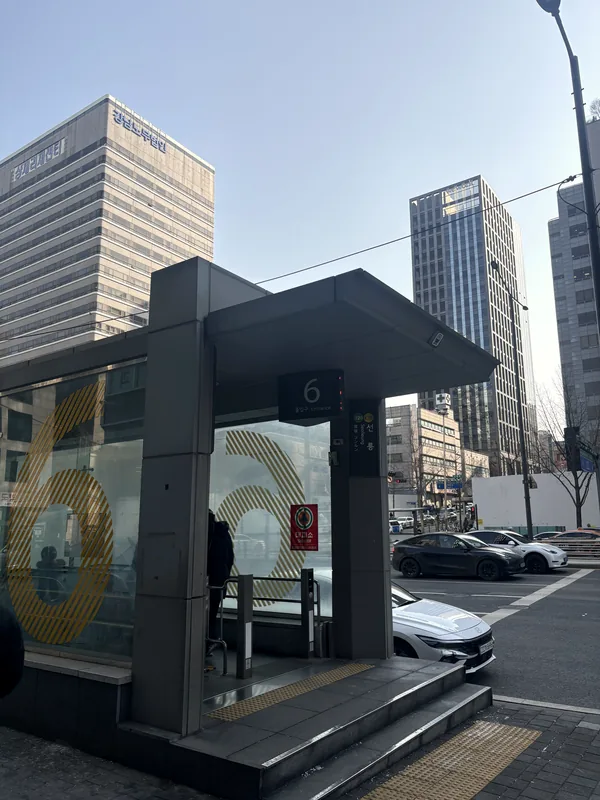
Before you travel
Clarify your concern before you clarify the treatment. A common mistake is to see a treatment trending on social media and go straight to asking whether you can have it. Better to describe the problem — "jawline softening", "enlarged pores", "barrier easily upset" — and let the doctor decide what fits.
Gather your medical information. Current medication (especially anticoagulants, immunosuppressants, isotretinoin), allergies (drugs and food — fish allergy matters for Rejuran; metal allergy matters for Gold PTT), previous aesthetic treatments (when, what, which material, where), chronic conditions and surgical history. These directly affect the plan and its safety.
Thread lifts and fillers matter most. Existing implants in the face change how energy-based treatments must be planned. Non-dissolvable materials (PLLA, CaHA) in particular must be disclosed. This is a safety input, not optional detail.
Prepare photographs. Front, 45° and profile views in natural light, without make-up or filters. Far more useful than a text description for initial online contact.
Booking: what "appointment only" means
THE LIZ CLINIC is appointment only and does not accept walk-ins. For visitors the practical consequence is that turning up unannounced may mean not being seen, even during opening hours.
One easily missed rule: last registration is one hour before closing. On days that close at 20:00, arriving after 19:00 may mean being turned away.
When you book, confirm: your available dates and times, your main concern, whether you need language support, and how many days you'll stay. The length of stay matters — it determines whether the doctor can schedule anything with a recovery period.
The booking channel is on Contact & booking: WeChat (QR code from the clinic's website).
Language
THE LIZ is a local boutique clinic in Gangnam whose patients are mainly Korean. The multilingual toggle on its website is a browser translation widget, not a dedicated interpreter — the two are often confused.
Whether on-site English or Chinese support is available should be confirmed when booking; don't assume it.
If the clinic can't provide language support, options include bringing your own interpreter, arranging one through a third-party medical-tourism platform, or using a translation app — bearing in mind that app translation of medical information carries real risk of error.
The consultation covers history, medication and allergies. A mistranslation there isn't a matter of "being unclear" — it's a safety risk. Write your key medical information in Korean or English in advance and bring it with you; it's more reliable than translating on the spot.
The consultation
One thing sets this clinic apart from most: a single doctor throughout. Consultation, treatment and aftercare are all done by the same physician — there is no split between a consultant who recommends and a doctor who performs. The judgement you hear at consultation comes from the person who'll do the work.
A consultation usually covers: a health questionnaire (history, medication, allergies), the doctor's examination and assessment, discussion of the plan and quote, and scheduling once you agree.
Consultation runs both ways. The doctor assesses you; you should assess whether the plan makes sense. The questions listed on the device comparison page are the ones worth asking.
If you have doubts, "I'd like to think about it" is a perfectly legitimate answer. Leaving without deciding isn't a wasted trip — take the plan and the quote away, think it over, then decide.
On quotes, confirm: the treatment name, the device or product brand and model, the quantity (lines / ml / units), the areas covered, and whether follow-up is included. A total price alone can't be compared between clinics.
How to verify equipment and consumables
The effect and safety of energy-based and injectable treatments both depend on genuine equipment and consumables. Things to confirm at consultation:
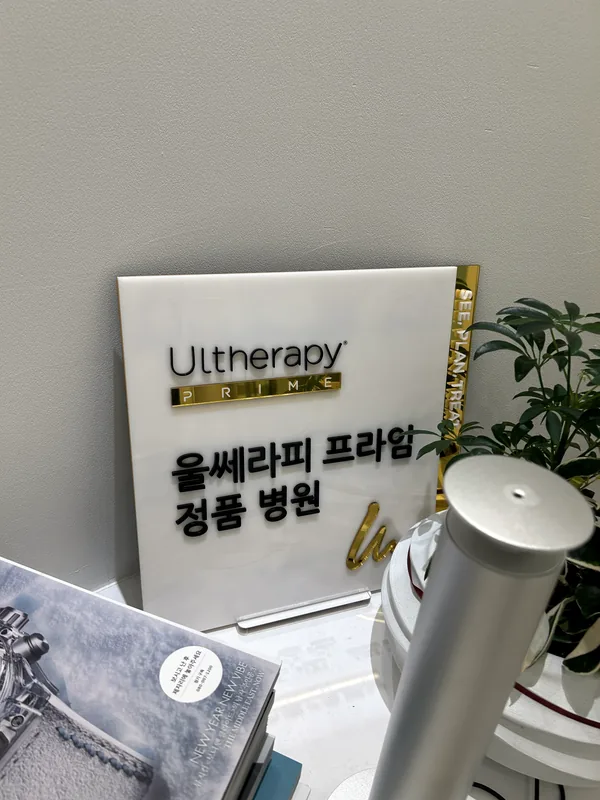
The device itself. Ask for the specific model. Reputable clinics usually display the manufacturer's authorised-provider certificate — THE LIZ displays its Ultherapy Prime certificate on the premises.
Transducers and consumables. Ultrasound transducers are consumables whose condition affects energy output. Ask about their usage and replacement.
Injectable products. Ask to see the brand, formulation and packaging. Hyaluronic acid, botulinum toxin and similar products all have regulated distribution and packaging marks in Korea.
Emergency provisions. Before filler, confirm the clinic stocks hyaluronidase (Hyalase). It's a basic safety provision for filler; THE LIZ lists it on its website.
These are reasonable questions. A reputable clinic won't be put out by them. If the answers are evasive or vague, that itself tells you something.
How many days to allow
This is where visitors most often plan badly. Recovery varies widely between treatments, and the itinerary needs to match.
Almost no recovery (Cutera Genesis, CureJet, Volnewmer, botulinum toxin): brief redness at most; most people carry on the same day. These constrain your schedule least.
Short recovery (Ultherapy Prime, Thermage FLX, Shurink Universe, Revlite): possible brief redness or mild swelling, settling within days without disrupting normal plans.
Definite recovery (Virtue RF; Fotona StarWalker when epidermal spots are treated): clear redness, possible crusting or flaking, typically one to three days.
Longer recovery — plan specifically (Pearl, Pearl Fractional): ablative treatments with a crusting and flaking phase, typically 5–7 days or more, during which make-up and social plans are off. Don't force these into a two- or three-day trip.
Injectables have their own timing (fillers, skin boosters): swelling, bruising or papules at injection points are possible. Filler's final shape usually settles at about two weeks — what you see immediately isn't the final result.
A particular note on Vbeam Perfecta: at higher settings it can cause purpura — a bruise-like appearance lasting one to two weeks. Whether to use those settings should be decided at consultation in light of your schedule.
A practical rule: if you can only stay two or three days, prioritise treatments with short recovery. Anything needing recovery time either gets enough of it, or waits for a period when you can follow through on aftercare.
After treatment and after you get home
General aftercare: sun protection (true for almost every treatment, critical for pigment and ablative work), extra moisturising, avoid heat (saunas, steam rooms, long hot baths), avoid vigorous exercise and alcohol, and avoid irritating skincare actives during recovery.
One iron rule for crusting treatments: don't pick. Forcing crusts off is the main cause of pigmentation and scarring.
PLLA collagen stimulators may require post-treatment massage. Confirm the exact instructions and duration with the doctor — it isn't optional.
If something seems wrong after you're home, act promptly rather than waiting. With injectables in particular — unusual pain, skin colour change (blanching or purplish), visual change — these are signs to seek medical attention immediately, not to wait for a return visit.
Before you leave, ask the clinic for: a treatment record (treatment, product, quantity), aftercare instructions, and a contact for problems. Keep the record safe; any medical provider dealing with a related issue later will want it.
On expectations
A closing note that doesn't read like marketing: aesthetic medicine has real limits, and individual variation is large. The same treatment at the same dose can give quite different results in different people, depending on baseline condition, metabolism and habits.
Thinking of a treatment as "an improvement on what's there" rather than "becoming someone else" usually leads to a better experience. If the doctor says a goal isn't achievable, that is usually responsible judgement, not a brush-off.
This clinic has written 「불필요한 과잉 진료는 배제」 — no unnecessary over-treatment — into its brand philosophy. If you hear "you don't need that" at consultation, take it as the clinic practising what it says.
And any promise of guaranteed results or zero risk deserves suspicion — medicine always involves individual variation and uncertainty.
Book a consultation
The clinic is By appointment only; walk-ins cannot be accommodated. Please confirm a time in advance.