
THE LIZ Journal
A clinic with one doctor: what you gain and what you give up
At THE LIZ the head doctor handles everything from consultation to aftercare; there is no consultant. Where that helps, what it costs, and how it differs from the division of labour at large Gangnam clinics — laid out so you can decide whether it suits you.
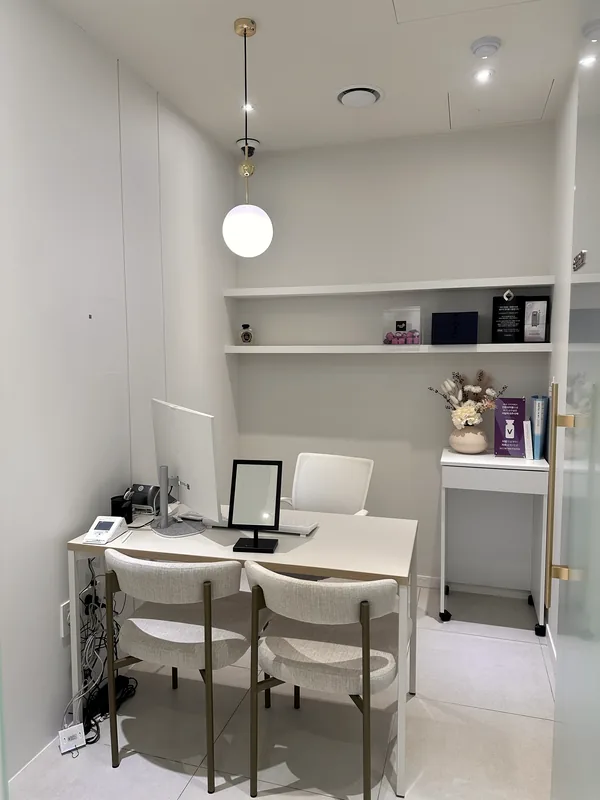
Most aesthetic clinics in Gangnam run on a division of labour: consultants greet you and recommend a plan, doctors carry it out, the front desk manages the schedule. THE LIZ doesn't work that way — from the first consultation through treatment to follow-up, it is the head doctor throughout. This article doesn't argue for the model; it lays out what it gives and what it costs.
What you gain
The person judging is the person doing. Under a division of labour, the person recommending your plan isn't the one performing it; there is a layer of relay in between, and what you heard at consultation can differ from what is done. One-doctor care removes that layer: the person telling you "you don't need this" is the person who could have done it.
No sales pressure. A consultant's role is usually tied to conversion — not a moral failing, a job design. When the doctor conducts the consultation, that motive isn't in the room. The clinic writes "no unnecessary treatment" into its philosophy; one-doctor care is the structure that lets it hold.
Someone responsible afterwards. If something concerns you after treatment, the person you reach is the one who made the judgement and did the work — no relay between consultant and doctor.
Nothing gets lost. Your treatment history, allergies and the judgement from your last visit are all in one head. Under a division of labour, that information depends on handover, and handovers leak.
What you give up
Capacity is capped. One person's hours are fixed. The clinic is appointment only, does not accept walk-ins, and stops registration an hour before closing — not a matter of attitude, but the inevitable constraint of one-doctor care. Popular slots may be unavailable; a short trip needs booking ahead.
No second doctor to switch to. If you want to compare opinions from different doctors within one institution, that isn't possible here.
Not for cases needing several specialties. Complex dermatological disease and anything requiring surgery fall outside an independent family medicine specialist's clinic. The clinic itself performs no surgery.
Language support is limited. A local clinic's patients are mainly Korean. Whether on-site English or Chinese support is available must be confirmed when booking; don't assume it.
Choosing between this and a large clinic
There is no universal answer, only fit:
- If you already know what you want and care most about consistent execution and someone responsible afterwards, the certainty of one-doctor care is an advantage.
- If you aren't sure what you want and would like to hear different doctors within one clinic, a multi-doctor institution suits better.
- If your problem spans specialties, a single-doctor clinic isn't the right starting point.
One practical point
One-doctor care means consultation time is genuinely allocated to you. Use it: previous treatments (especially thread lifts and fillers, and their materials), allergies, current medication, how many days you're staying. Here that information won't be lost in relay — but only if you say it.
General information only, not medical advice; treatment decisions are made at consultation. Facts are taken from the clinic's official disclosure.